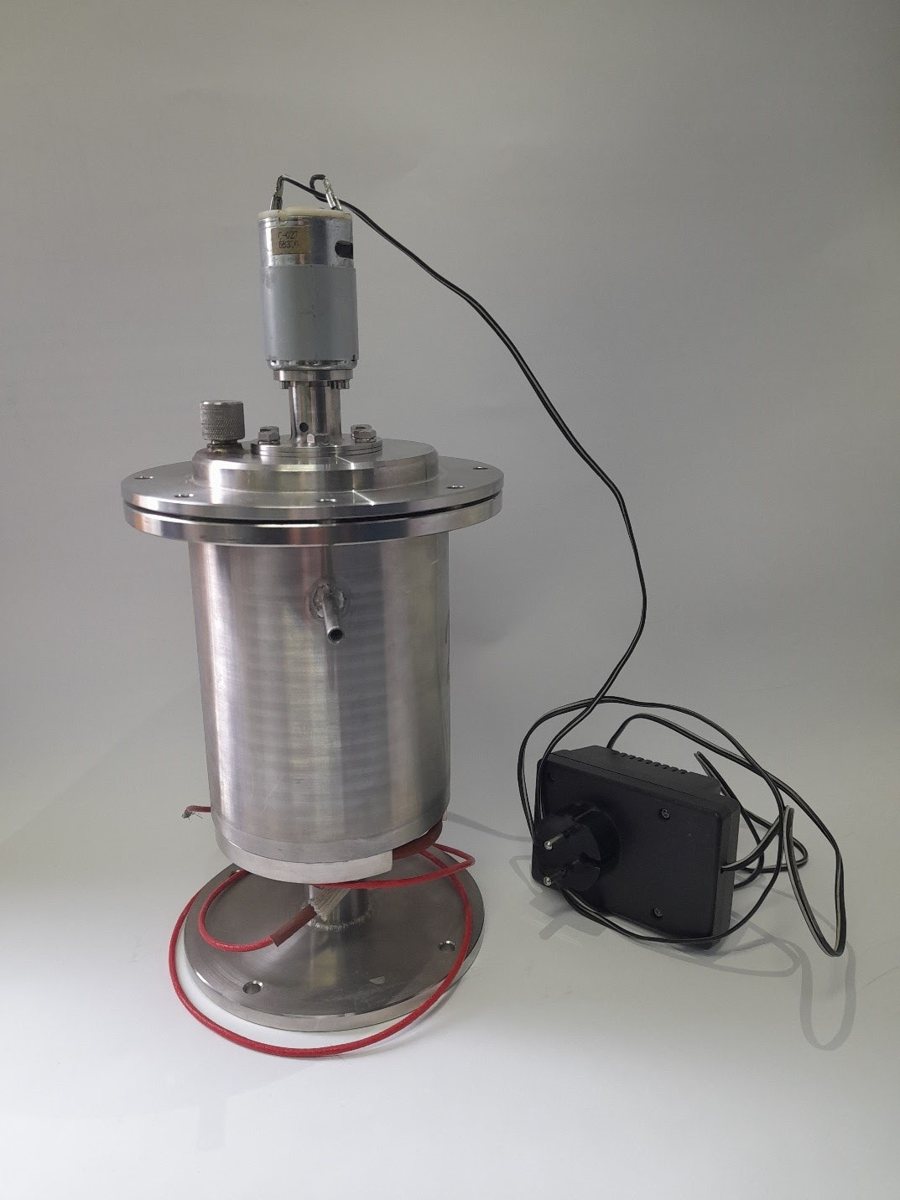
How the SMG filtration system works
After the plant’s existing primary filter system, the flue gas is routed through the system, where it comes into contact with a water suspension of a natural mineral sorbent. The most hazardous components of the flue gas bind to the sorbent and are permanently removed from the gas stream, reducing their concentration in the outgoing gas. The primary focus is SO₂, and we are also investigating NOx and CO.
The principle in four steps
Flue gas leaves the plant and passes through the existing dust removal system.
The gas enters the SMG system and contacts the mineral sorbent suspension.
The suspension circulates through the system and the pollutant concentration falls.
Cleaner gas leaves the system.
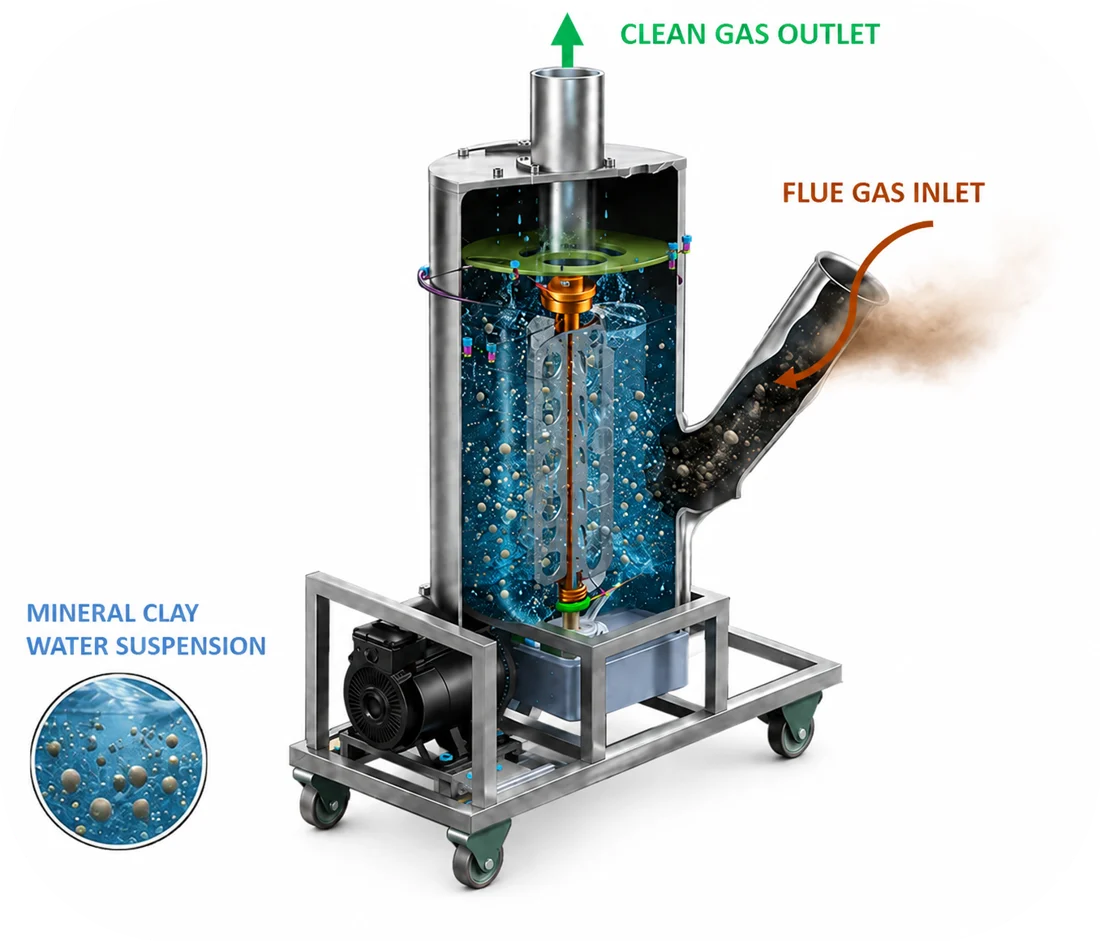
Design
The basic unit is a module in which the gas is cleaned. For plants that run continuously over long periods, the unit is built with two modules, so one can operate while the other is serviced. Several units can be connected in series or in parallel, depending on the user’s needs.
Development goals
- Lower cost than conventional solutions
- Installation without major changes to existing equipment
- No scaling or deposits, unlike limestone-based systems
- Neutral pH: the sorbent buffers the solution and prevents acidification
- Maintenance without aggressive acids
- Maintenance in minutes instead of days
- Safe disposal of spent sorbent
- Potential to treat several pollutants
Development status
Laboratory prototype
MVP
Industrial prototype
On-site pilot